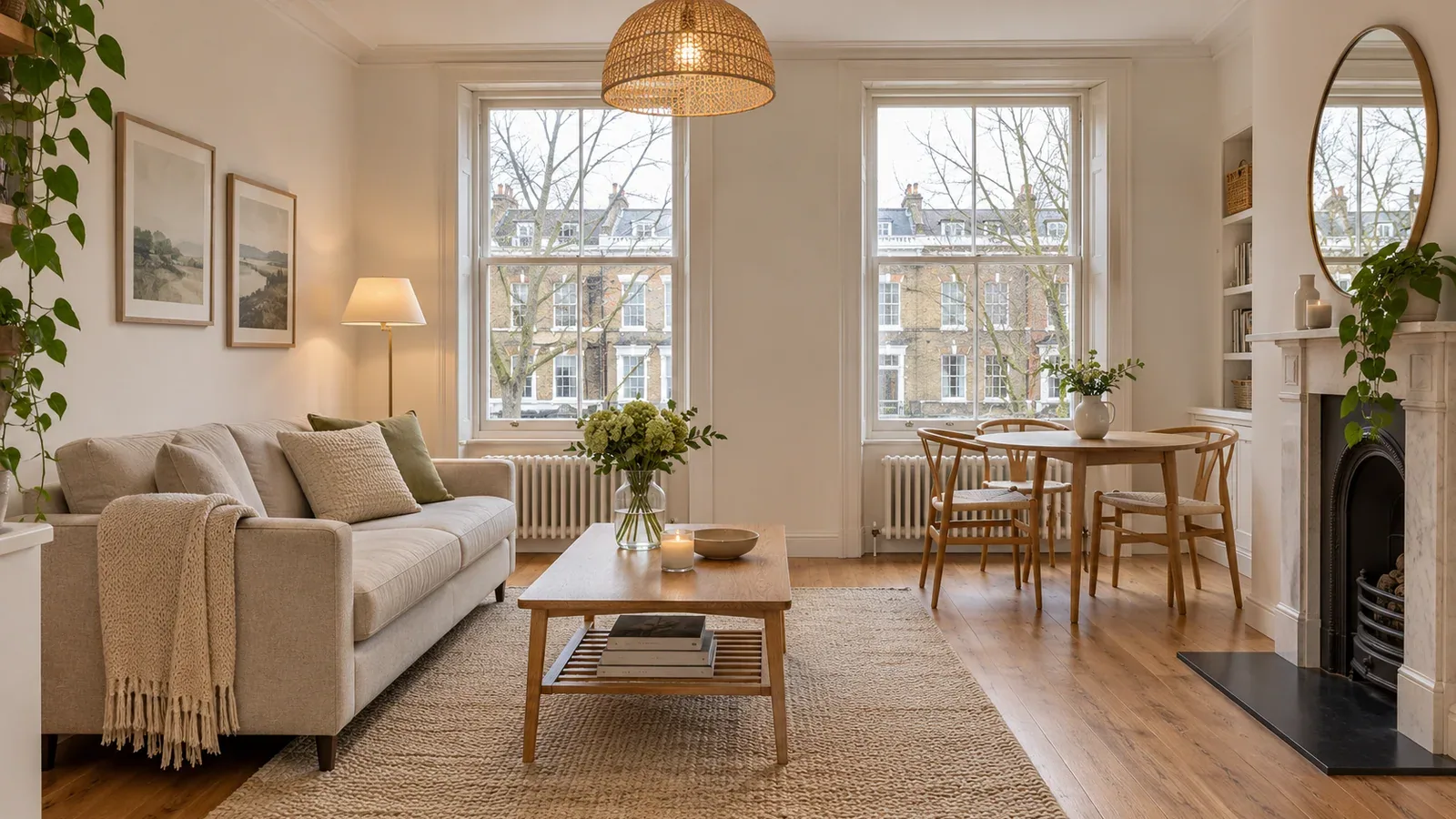
You should clearly disclose virtual staging whenever digitally added furniture or other changes could affect how someone understands a property. UK and EU consumer-protection rules focus on misleading presentation and missing material information, rather than prescribing one universal photo label. A practical approach is to identify each illustration, explain what changed and show the actual room alongside it.
What virtual staging disclosure rules mean in the UK
For estate agents and other traders marketing to consumers, the starting point is the overall impression of the listing. A realistic image can suggest that furniture is included, a room is ready to occupy or a particular layout is achievable. Those impressions matter even when the written description is technically accurate.
The Competition and Markets Authority's unfair commercial practices guidance explains the framework under the Digital Markets, Competition and Consumers Act 2024. Its unfair commercial practices provisions apply to practices from 6 April 2025, replacing and updating the previous Consumer Protection from Unfair Trading Regulations.
The guidance covers false or misleading information, deceptive overall presentation and material information that is omitted or presented unclearly or too late. A transactional decision can arise before a purchase: the CMA gives a property example involving a consumer deciding whether to view a house.
For virtual staging, the useful question is therefore: could this image change someone's decision because they misunderstand what exists or what is included? If so, explain the alteration clearly before that misunderstanding drives an enquiry or viewing. Do not assume that a vague disclaimer at the bottom of the particulars resolves the impression created by the gallery.
This is a practical application of general consumer-protection principles, rather than a claim that the Act specifies a particular watermark, font size or mandatory phrase for every staged photograph.
How the EU framework and portal policies fit together
The EU's Unfair Commercial Practices Directive summary describes protections against misleading actions and misleading omissions in business-to-consumer marketing. An overall presentation can mislead even where individual information is correct; material information can also be misleadingly hidden, ambiguous or supplied too late.
Member States implement and enforce the framework through national rules. Do not treat a single English-language caption as proof of compliance across Ireland, France, Germany, Spain or the Netherlands. Use wording your intended audience understands, and check the relevant country's property advertising requirements, particularly where an image suggests renovation or a different permitted use.
Portal policies are a separate check. Before uploading to Rightmove, Zoopla, Funda, Idealista or ImmoScout24, review the current guidance available through your agent account or ask support about digitally altered images. Confirm whether illustrations are accepted, how they should be identified and whether captions or image overlays are restricted. This guide does not claim that all those portals share a specific virtual staging policy.
A portal accepting an upload does not establish that its content is legally accurate. Equally, a sensible disclosure practice may need adapting to the portal's technical rules. Check what visitors actually see after publication, rather than relying on what your agency software displays.
Which edits need an explanation?
Use the extent of the change and the impression it creates to decide how to describe it. The following is an editorial checklist, not a table of statutory exemptions.
| Image change | Recommended explanation | What to check |
|---|---|---|
| Furniture added to an empty room | Identify the image as virtually staged and state that the added furniture is illustrative. | Furniture scale, access routes and what is included in the sale or tenancy. |
| Possessions digitally removed | Say that belongings have been digitally removed and provide a current original. | Whether damage, fittings or other relevant features disappeared too. |
| Daylight converted to twilight | Identify it as a digitally created twilight illustration. | Whether lighting, views or surroundings now imply features that do not exist. |
| Sky replacement | Explain a meaningful sky alteration where it could otherwise create a misleading impression. | Preservation of the skyline, outlook and neighbouring buildings. |
| Exposure or white balance corrected | Accurate routine correction may need no special staging label; assess the result. | Whether colours, brightness or condition have become materially misleading. |
| Walls, windows or permanent fittings changed | Treat as a proposed design or renovation illustration, clearly separated from current photographs. | Feasibility, permissions and the risk of suggesting completed work. |
A disclosure does not make every alteration acceptable. If an edit hides damp, removes a neighbouring building or enlarges a room, the better response is to reject it and use an accurate image. A short label cannot reliably undo a strongly misleading visual impression.
Furniture styling also needs a reality check. A compact bedroom should not appear to accommodate an oversized bed and generous circulation space if that arrangement would not fit. Compare the proposal with measured dimensions and the floorplan. Our guide to virtual staging versus traditional staging explains the practical differences between illustrating a layout and furnishing the actual room.
Clear caption wording you can adapt
Choose wording that tells the reader what changed. “Enhanced” or “for guidance only” gives little useful information when an entire furniture arrangement has been generated. These examples are starting points to adapt to the property, rather than legally approved templates.
- Empty room with added furniture: “Virtually staged illustration: furniture and decorative items have been digitally added. See the adjacent photograph for the room's current appearance.”
- Occupied room with possessions removed: “Digitally decluttered illustration: selected belongings have been removed from this image. The accompanying original shows the room as photographed.”
- Combined decluttering and staging: “Digital illustration: existing belongings have been removed and suggested furniture added. This image does not show the room's current contents.”
- Proposed refurbishment: “Proposed design illustration, not the property's current condition. Works shown have not been carried out.”
- Day-to-dusk edit: “Digitally created twilight illustration based on a daytime photograph.”
State that furniture is not included only after confirming the actual sale or tenancy terms. Where some items are included, identify which ones through accurate particulars rather than using a blanket statement that contradicts the agreement.
Put the explanation beside the relevant image where the channel supports it, and identify altered photographs in the listing description too. If image overlays are permitted, a readable label can help the disclosure travel with a saved or shared image. Test mobile crops so the wording remains visible. Alt text supports accessibility, but should not be the only place where the alteration is explained.
A publication checklist for agents and photographers
Agree responsibilities before editing. The photographer may deliver accurate originals and labelled illustrations, while the agent controls captions, ordering and the final property description. Someone still needs to review the complete published listing.
- Save the original. Keep a dated copy in your own property folder before commissioning changes.
- Write a precise editing brief. Specify what can be added or removed and require the room's permanent features and proportions to remain accurate.
- Compare the result with the source. Check doors, windows, sockets, radiators, flooring, views and visible condition, as well as the furniture.
- Confirm the facts with the property owner. Check current condition and included contents; owner approval does not replace the agent's review.
- Pair illustrations with current photographs. Placing the original immediately beside the staged version is a useful practice, subject to the channel's rules.
- Preview every destination. Review the portal gallery, agency website, brochure and social post on a phone. Confirm captions survive the feed.
- Keep an approval record. Retain the original, final edit, wording and publication date so later staff can understand what was changed.
If you use EstatePixelPro for Virtual Staging or Declutter, download the originals and edited files into that record. Originals are kept on the service for seven days and edited photos for 30 days, so the service should not be your long-term listing archive.
Budget for review and captioning as well as editing. The virtual staging cost guide helps you plan the editing side without overlooking the work needed to prepare a usable listing.
Apply the same care to holiday lets and shared images
For a holiday let, a guest may reasonably expect to find the furniture shown in the accommodation photographs. A digitally added desk, cot or sofa bed could suggest an amenity that is not supplied. For booking galleries, use current photographs showing what guests will receive; keep proposed designs separate and check the platform's current policies before using illustrations.
Social posts and emailed particulars deserve the same review as the main listing. If a staged image is shared without its original gallery caption, add the explanation to that post or document. Recheck marketing when the property's condition changes or real furniture is installed.
The workable standard is straightforward: make the current property easy to understand, make the digital changes explicit and preserve the evidence behind the images. EstatePixelPro can help illustrate a furnishing idea; start with a suitable room photograph and try the free sign-up credits, then review and label the result before publishing.
Frequently asked questions
Is virtual staging illegal in the UK?
Virtual staging is not automatically unlawful. The risk arises when a listing misleads consumers about the property; accurate images, clear explanations and compliance with the relevant portal's rules are essential.
Does every EU country require the same virtual staging label?
Do not assume there is one prescribed label across the EU. National property advertising rules and portal requirements need checking alongside the general consumer-protection framework.
Can an agent use a virtually staged photo as the main listing image?
Check the destination portal's current rules before choosing the lead image. If permitted, make the illustrative nature clear wherever that image appears, including search previews where possible; use an accurate current photograph if adequate disclosure cannot be displayed.
Should virtually staged photos be replaced after real furniture is installed?
Take fresh photographs once the room is furnished, since the real arrangement may differ from the illustration. Update all marketing channels and remove captions that no longer describe the replacement images.